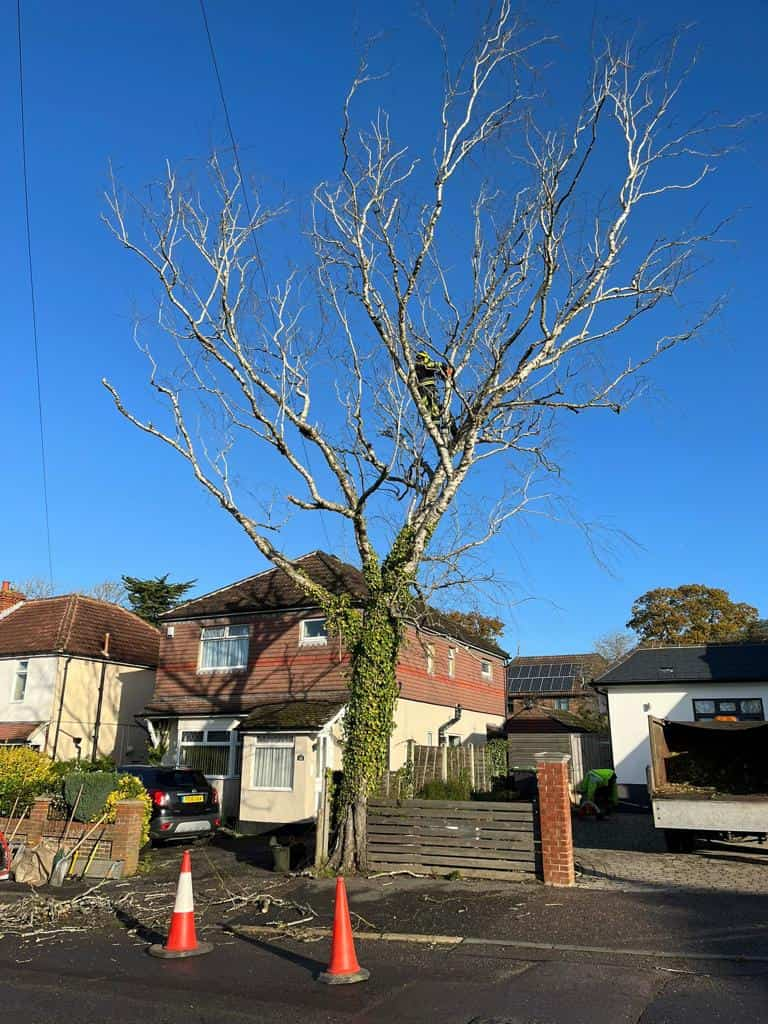
Trees can become some of the most important features within a garden, providing structure, greenery, shade and character. However, as trees mature, their requirements change. Branches may become overcrowded, crowns can grow beyond the available space, deadwood may develop, or an individual tree may eventually become unsuitable for its location.
Knowing that a tree needs attention is often easier than knowing exactly what type of work it requires. Pruning, trimming, crown reduction and complete removal all serve different purposes, and choosing the wrong approach can unnecessarily alter the tree without resolving the underlying problem.
For homeowners in Sherston, Gloucestershire, professional assessment is the best starting point. At EM Tree Surgery Sherston, tree work can be planned around the condition, structure, location and individual requirements of the tree rather than applying the same solution in every situation.
Why Choosing the Right Tree Work Matters
Tree surgery should have a clear purpose.
Removing branches simply because a tree appears large can result in unnecessary work, while carrying out minor trimming when substantial structural concerns exist may fail to address the actual issue.
Before deciding what work is appropriate, several factors should be considered:
- The condition of the tree
- Its overall structure
- Dead or damaged branches
- The density of the crown
- Its proximity to buildings and garden features
- How much space is available for continued growth
- Whether particular branches are causing problems
- The long-term suitability of the tree for its location
Once these factors are understood, the appropriate form of tree surgery becomes much clearer.
What Is Tree Pruning?
Pruning is a selective approach to branch removal.
Rather than dramatically changing the entire tree, specific branches are removed for a particular reason. This might involve addressing damaged, dead, poorly positioned or problematic growth.
Professional pruning can help improve the overall structure of a tree while retaining its natural character.
When Might a Tree Need Pruning?
Pruning may be appropriate where there are:
- Dead branches within the crown
- Damaged limbs
- Crossing or rubbing branches
- Crowded growth
- Weak or poorly positioned branches
- Specific branches causing obstruction
The objective is not necessarily to make the tree significantly smaller. Instead, pruning focuses on particular areas that would benefit from careful attention.
Why Selective Pruning Is Better Than Random Branch Removal
Every branch contributes to the structure and appearance of a tree. Removing branches without understanding how the tree is growing can create an unbalanced result.
Professional pruning considers which branches should be removed and which should remain.
This selective approach helps retain an appropriate shape while addressing the reason the work was required in the first place.
It also avoids unnecessarily removing healthy growth simply to make the tree look tidier.
What Is Tree Trimming?
The term tree trimming is often used more generally to describe cutting back unwanted or excessive growth.
For homeowners, trimming may be considered when a tree has begun extending into areas where greater clearance is desirable.
Examples might include growth approaching:
- Garden paths
- Seating areas
- Sheds
- Fences
- Other trees
- Frequently used areas of the garden
However, the appropriate amount of trimming depends on the individual tree. Simply shortening every visible branch is rarely the best approach.
Trimming Should Still Respect the Tree’s Natural Form
A common mistake is assuming that trimming means cutting every branch back to the same point.
Trees do not naturally develop as uniform geometric shapes. Excessive cutting can leave a tree looking awkward and may remove considerably more growth than necessary.
Professional tree work aims to manage unwanted growth while retaining an appropriate overall form.
This can make the finished result look much more natural within the garden.
What Is Crown Reduction?
Crown reduction is a more specific form of tree management used to reduce the overall height, spread or volume of a tree’s crown.
Rather than simply removing individual problematic branches, the work is carried out across appropriate parts of the crown to create a smaller overall profile.
The aim is to achieve a balanced result rather than leaving isolated branches shortened without consideration of the rest of the tree.
When Might Crown Reduction Be Appropriate?
Crown reduction can be useful when a tree has become too large for the space available but does not necessarily need removing.
Situations where reduction may be considered include:
- The crown has become excessively large for the garden
- Branches are extending too far across surrounding areas
- Greater clearance is required around garden features
- The tree’s size needs more controlled management
- The crown would benefit from carefully planned reshaping
The appropriate reduction will depend on the species, condition and structure of the individual tree.
Reduction Is Not the Same as Severe Cutting Back
A professionally reduced tree should retain a recognisable and balanced crown.
Removing excessive amounts of growth or shortening branches indiscriminately can produce a poor result. Crown reduction requires careful selection of appropriate pruning points throughout the canopy.
This is one reason why experienced tree surgery is particularly important when reducing mature trees.
When Does a Tree Need Complete Removal?
Tree removal is a very different decision from pruning or crown management.
Where possible and appropriate, suitable tree surgery may allow a tree to remain as part of the garden. However, there are circumstances where complete removal can become the most sensible option.
These may include situations where:
- A tree is dead
- Significant structural deterioration has developed
- Major damage has affected the tree
- The tree has become unsuitable for its location
- Retaining the tree is no longer practical
- Other appropriate tree surgery would not resolve the underlying problem
Removal should be based on the condition and circumstances of the individual tree rather than simply its size.
Large Trees Do Not Automatically Need Removing
A mature tree can appear imposing, particularly in a smaller garden, but size alone does not mean removal is required.
If the tree is otherwise suitable for its location, carefully planned pruning or crown reduction may provide the necessary management.
A professional assessment can help determine whether the problem relates to the entire tree or simply particular parts of its crown.
This distinction can prevent unnecessary removal where a more targeted solution would achieve the desired result.
Deadwood May Only Require Selective Removal
Finding dead branches within a tree does not necessarily mean the entire tree is dying.
Trees can develop individual dead limbs while the remainder of the crown remains healthy and structurally appropriate.
Deadwood removal involves identifying and removing relevant dead branches without unnecessarily altering healthy sections.
This can be particularly worthwhile where dead branches are positioned above frequently used garden areas.
What If Branches Are Becoming Too Dense?
A very dense crown can sometimes benefit from selective pruning rather than reduction or removal.
Where branches are overcrowded, crossing or rubbing against one another, targeted work may improve the arrangement of the crown without significantly changing the overall dimensions of the tree.
The important consideration is why the crown has become problematic.
If the issue is internal congestion, selective pruning may be appropriate. If the entire crown has simply outgrown the available space, reduction may be more suitable.
What If the Tree Is Growing Towards a Building or Fence?
Proximity to surrounding features is one of the most common reasons homeowners begin considering tree surgery.
However, removing the entire tree is not automatically necessary because several branches are extending in an unwanted direction.
Professional assessment can establish whether targeted pruning can provide appropriate clearance while maintaining the rest of the tree.
The relationship between the tree and surrounding garden should always be considered before deciding how much work is required.
Can Several Types of Tree Work Be Combined?
Yes. Tree surgery does not always fit neatly into one category.
For example, a tree undergoing crown reduction may also contain deadwood that needs removing. Another tree might require selective pruning alongside work to improve clearance around a particular garden feature.
The overall specification should therefore be based on what the individual tree requires rather than trying to force every project into a single type of service.
Why Timing and Technique Matter
Tree work should not be approached simply as cutting branches until the desired size has been reached.
Different trees respond differently to pruning, and the location, size and type of cuts can influence the finished result.
Professional tree surgeons consider factors such as:
- Species
- Tree condition
- Branch structure
- Crown shape
- Amount of growth being removed
- The reason for carrying out the work
This allows the work to be planned with both the immediate objective and the remaining tree in mind.
Why DIY Tree Cutting Can Create Problems
Small garden maintenance tasks may appear straightforward, but tree work can quickly become more complicated as branch size and height increase.
Large limbs can be extremely heavy, and their movement after cutting is not always obvious beforehand. Working near fences, sheds, patios and other garden features also requires careful control.
There is also the risk of making unsuitable cuts that leave the tree unnecessarily damaged or poorly balanced.
Professional tree surgery combines controlled working methods with an understanding of tree structure, helping ensure the work is completed for the right reason and to an appropriate extent.
Start with the Problem, Not the Type of Service
Homeowners do not necessarily need to know whether they require pruning, trimming or reduction before contacting a tree surgeon.
It can be more useful simply to identify the concern.
For example:
“My tree is becoming too wide for the garden.”
“There are several dead branches.”
“One side is growing heavily towards my patio.”
“The crown has become extremely dense.”
“The tree appears damaged and I am unsure whether it can remain.”
An experienced tree surgeon can then assess the tree and determine which type of work best addresses that concern.
Professional Tree Surgery in Sherston
At EM Tree Surgery Sherston, we provide professional tree surgery services throughout Sherston, Gloucestershire, with work planned around the requirements of each individual tree.
Rather than removing more growth than necessary, a professional assessment allows the condition, structure, size and surroundings of the tree to be considered before recommending the appropriate approach.
Whether a tree requires selective pruning, general trimming, carefully controlled crown reduction or complete removal, choosing the right method can produce a much better outcome for both the tree and the surrounding garden.
Conclusion
Pruning, trimming, crown reduction and tree removal are not interchangeable services. Each addresses different circumstances, which is why understanding the actual problem should always come before deciding how much of a tree to cut.
Selective pruning can address individual branches and overcrowded growth, while trimming can manage unwanted extension into surrounding areas. Crown reduction is useful where the overall canopy needs carefully reducing, while complete removal may become appropriate when retaining the tree is no longer a suitable option.
For homeowners in Sherston, Gloucestershire, EM Tree Surgery Sherston can assess trees professionally and recommend an appropriate level of work based on their condition and surroundings. If you know that a tree needs attention but are uncertain which type of tree surgery is required, a professional assessment is the best place to start.
Call us on: 01666 337 167
Click here to find out more about EM Tree Surgery Sherston
Click here to complete our contact form and see how we can help with your trees needs.